Tag: gamification

  • Turning Language Learning into a Playful 3D Adventure

    Turning Language Learning into a Playful 3D Adventure

    Recently, I had a conversation with a representative of a language institute. Together with a French teacher, we discussed the needs and ambitions of such an institute, and explored what kind of digital learning solutions could truly support their mission.

    Two main directions emerged from the discussion:

    1. Library Gadget (VR Experience)
    2. Complete Online Collaborative Learning Environment

    Library Gadget
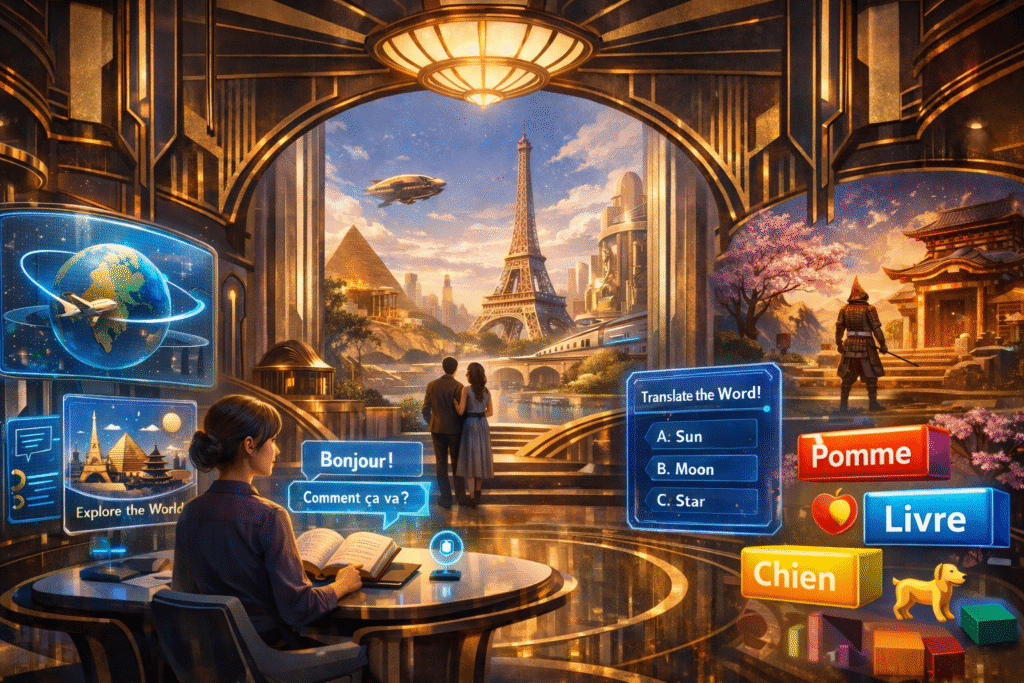
    The first idea is a gadget-like solution that can be used inside the institute’s physical library to make visits more engaging and fun for children.

    This would be a VR application where learners can enjoy short stories in immersive environments that spark curiosity and motivation for the language.

    Typical usage:

    • Core experience: 5–15 minutes
    • Optional extensions or mini-games: +30–40 minutes
    • Hardware: 4–10 VR headsets (e.g. Meta Quest 3)

    Key characteristics of the VR app:

    • Polished, intuitive interactions
    • Engaging, story-driven content
    • High-quality, colorful graphics
    • Native voice recordings
    • Short but memorable learning moments

    The idea is not to replace traditional learning, but to create a wow-effect that associates the target language with positive emotions and exploration.

    Online Collaborative Learning Environment
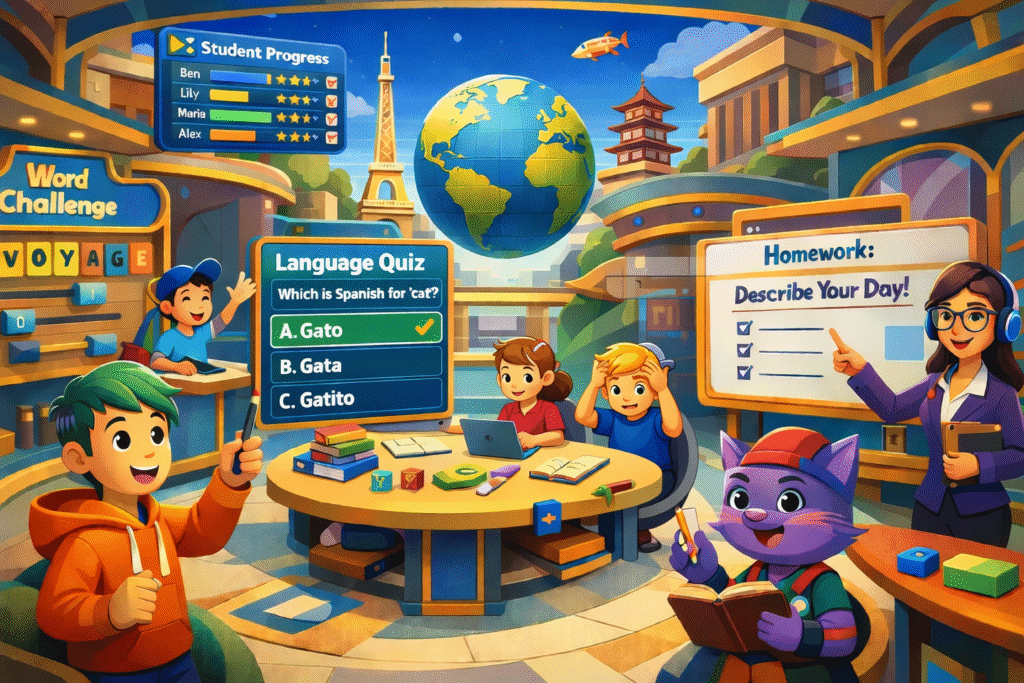
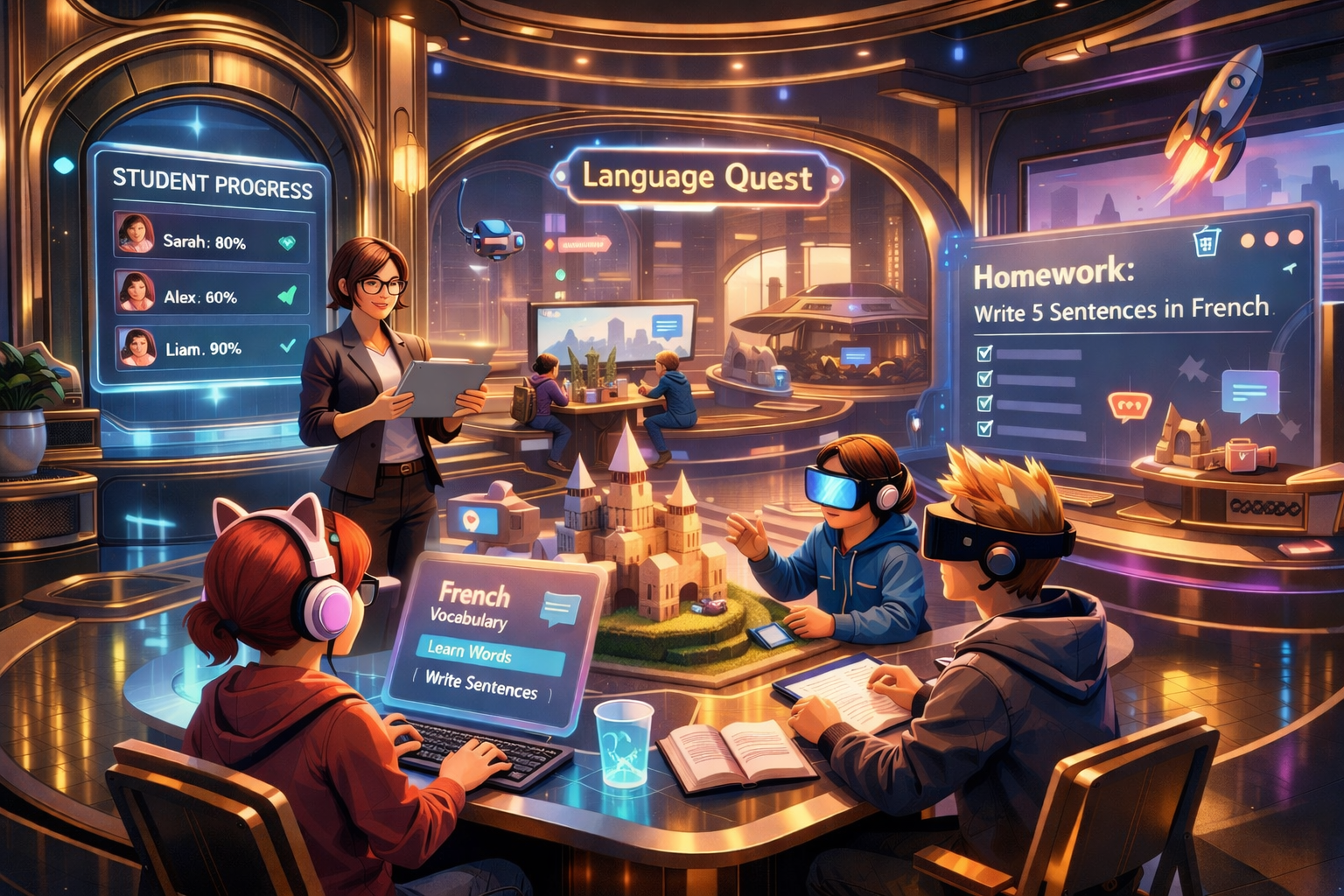
    The institute observed that children starting ten play games like Minecraft. This led to the idea of offering a similar multiplayer 3D space where students can:

    • Learn together
    • Do homework collaboratively
    • Explore the language through play

    Core requirements:

    • Fully 3D and multiplayer
    • Exciting, creative, and colorful visual style
    • Teachers can:
      • Assign homework
      • Track student progress
      • Join the world as participants

    In essence, this is a virtual learning world where language practice feels more like a game than a classroom.

    Practical Limitations for Language Institutes

    A major constraint for any language institute is quality control and coordination cost.

    Such institutions represent:

    • A national culture
    • A linguistic authority
    • A strong brand identity

    This means:

    • All texts must be grammatically perfect
    • All visuals must be culturally accurate
    • All interactions must be flawless
    • No glitches, no mistakes

    To ensure this level of quality, institutes must invest significant internal resources:

    • Content review
    • Linguistic validation
    • Art direction
    • Testing and QA

    In practice, this often means:

    For every 100 hours of development, there are at least 100 additional hours of coordination and quality assurance.

    This effectively doubles the real cost of any serious project.

    A Realistic Strategy

    A pragmatic approach might be:

    1. Start with the VR Library Gadget for a single target language.
    2. Let the institute evaluate quality and impact.
    3. If successful, the institute could license it globally:
      • 20–60 locations
      • 100–400 users
      • Approx. €10 per user

    This creates a low-risk entry point before committing to a full-scale platform.

    Fusion of Ideas: One Platform for VR and Desktop
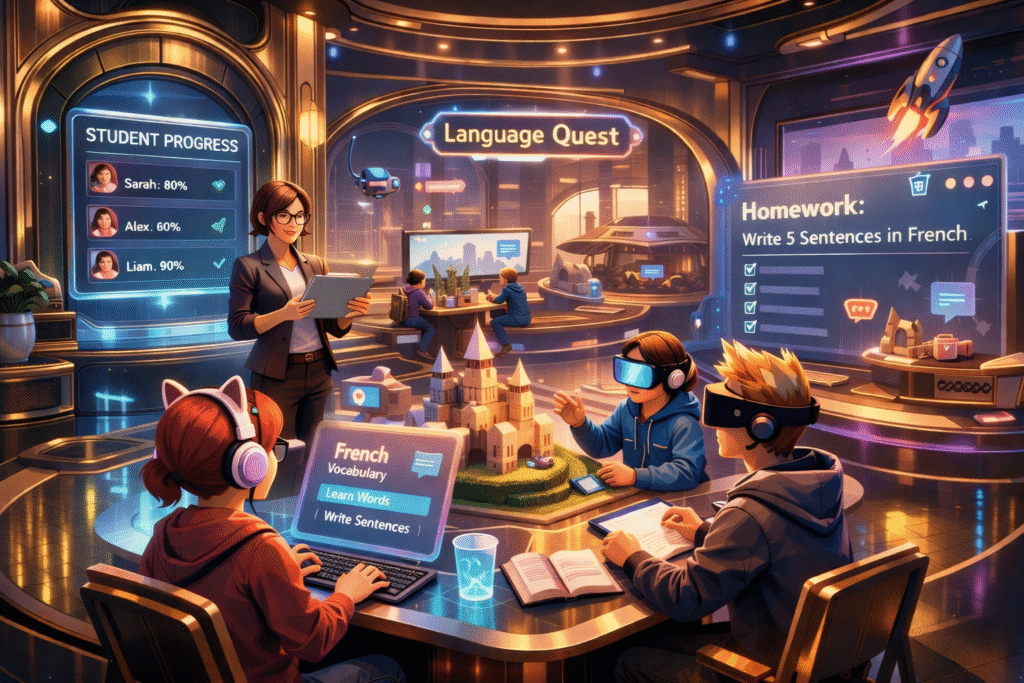
    The two concepts can actually converge into a single solution:

    A shared learning environment that works both in VR and in a desktop browser.

    Technically, both platforms have similar constraints:

    • Around 200,000 polygons per scene
    • Simple lighting
    • No heavy visual effects

    So a unified design is realistic.

    Shared Core Features

    • Engaging, story-driven worlds
    • Funny, colorful characters
    • Polished, well-tested interactions
    • Multiple mini-game types
    • Different atmospheres and environments
    • High-quality illustrations
    • Flawless grammar and language
    • Native speaker voice recordings

    In spirit, it becomes:

    A playful 3D playground where characters learn, explore, and interact together.

    A place where language learning feels like adventure, not obligation.

    Possible first steps for such a system:

    1. Research for similar solutions / usable technologies / standards
    2. A portal with register/login email/google/apple/facebook login
    3. Database: word sets table
    4. A 3D interaction with word sets
    5. Enable pictures with word sets
    6. Create characters to interact with
    7. 3 simple stories to teach language
    8. Story boards for these stories
    9. Realize first story


    A New Development Paradigm: From Code to Intent

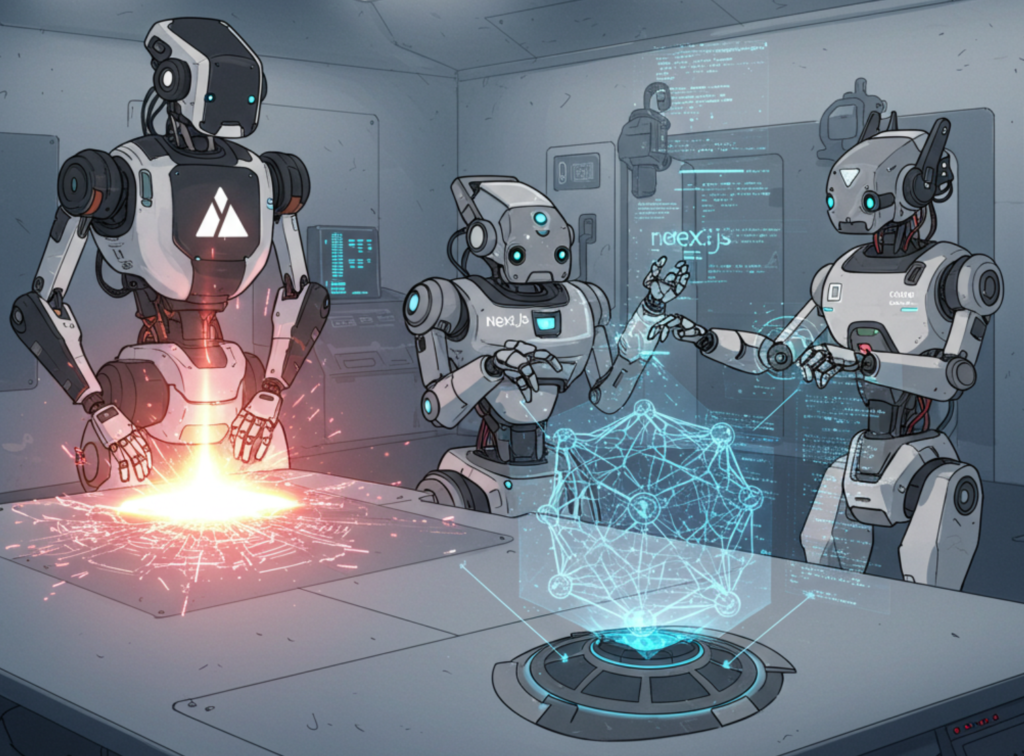
    In the past, developing such a system would have required many months of work. In 2026, however, LLM-based assistants can support most programming tasks and handle a large part of what junior developers used to do. In practice, this feels like having a small software team working alongside you at all times.

    Instead of relying solely on traditional prompting, development can follow an intent-based approach, where the desired functionality is described in structured markdown documents. This replaces the classical codebase with an intent base, from which the actual code is generated by LLMs. As a result, software development costs can be reduced to a fraction of what they were just a few years ago.


    Zsolt Balai, the author of this article is a software developer and intent engineer. He is working on publishing gamified learning apps and collaborative multiplayer systems. Contact him on zbalai.com.
  • Learning Experience Designer Tool

    Learning Experience Designer Tool

    How to build a tool to create story-based learning experiences? I am a developer and we are building up such a tool. I would like to write about the challenges and the steps on this road. But first, start with a story:

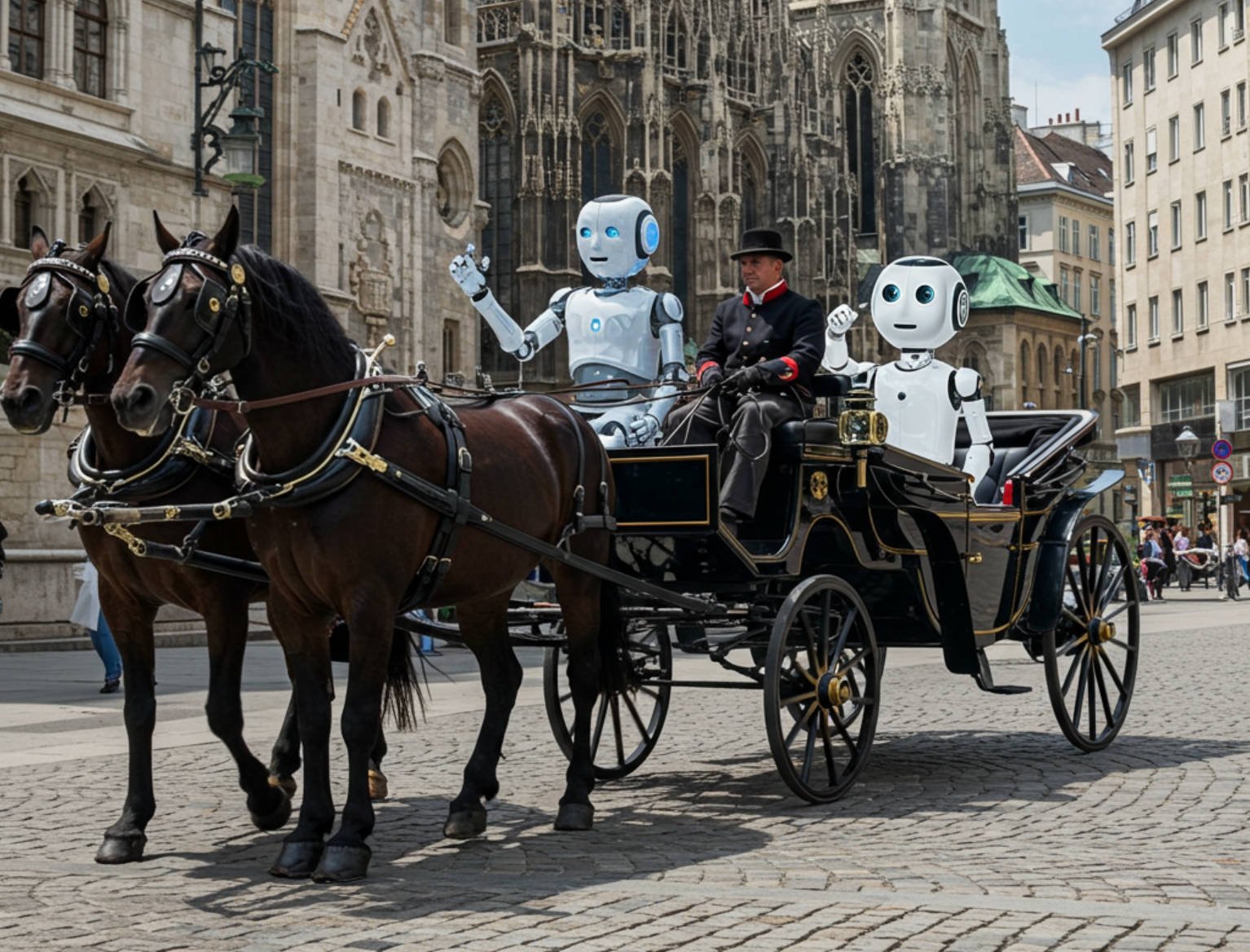
    A friend of mine, Marcel, asked me to help him learn Viennese German. He speaks German already, but in Vienna people speak a certain dialect that is not always easy to understand. I realized that this is a real-world need, someone who can, needs and wants to learn something new. This is very valuable.

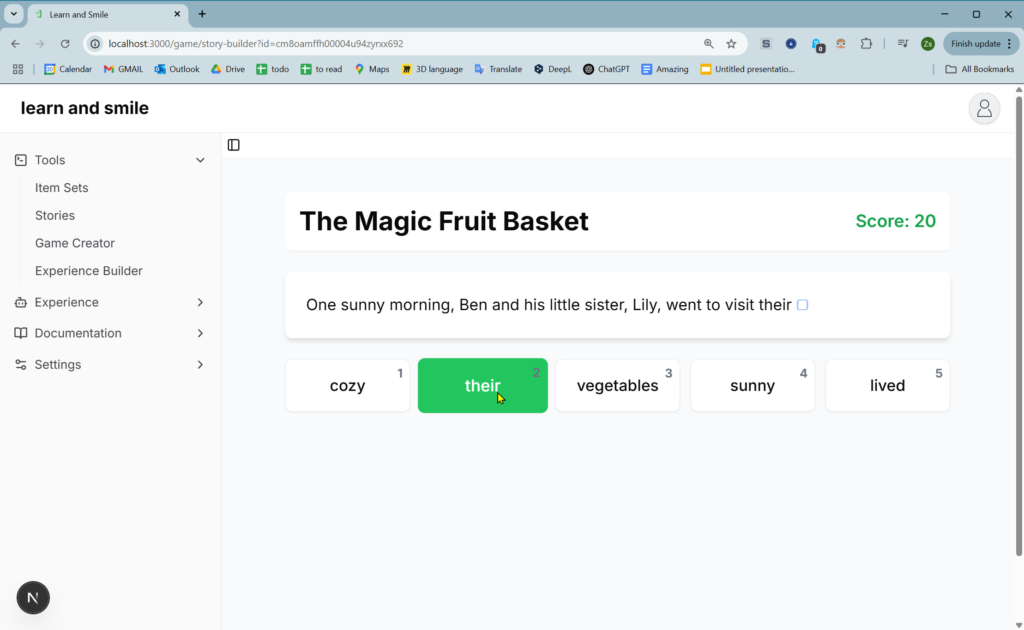
    So, I’ve started the task – later it became a little challenge – to create an amazing learning experience for Marcel. He liked the story builder game, so I took this as a basis for the experience.

    This game starts with a story and makes the student learn like an AI does: always just predict the next world. A big part of AI is just this skill, to predict the next word well. I believe actually that a certain part of the human intelligence is exactly this, predicting the next … . Our minds are preconditioned with the basis of this ability that gets developed during our childhood years. We as humankind can with the 2010s rise of the AI solutions also use these discoveries to understand ourselves better. Some interesting revelations:
    – It is impossible to train neuron networks starting with null values. Entropy was, is and will be part of the journey. It is natural.
    – To find global multidimensional mountaintops sometimes one needs to throw away the results of local mountaintops. (and waste many tens of thousands of dollars of calculations)

    Planning

    Anyway back to the story and my quest to create an amazing learning experience for Marcel. I started out with the following steps:

    1. Create story
    2. Create markup for the story builder game
    3. Test
    4. Make link available without signing in
    5. Send link

    Prompting

    Creating the story was very easy: first prompt: “find German words typically used in Wien”.  Then after writing around 15 expressions ChatGPT offered me “Would you like some example dialogues or phrases using these? Or maybe you’re looking for a themed list (e.g., food, travel, emotions)?”

    My second prompt: “yes, please make an example dialog using wien words in German, location in Wien city, playful, friendly, funny, B2 level” Marcel talks around C1-C2 level, but when we study new expressions we need to lower the level a bit to have more focus and energy for the new words. B2 level is more than enough for everyday conversations anyway.

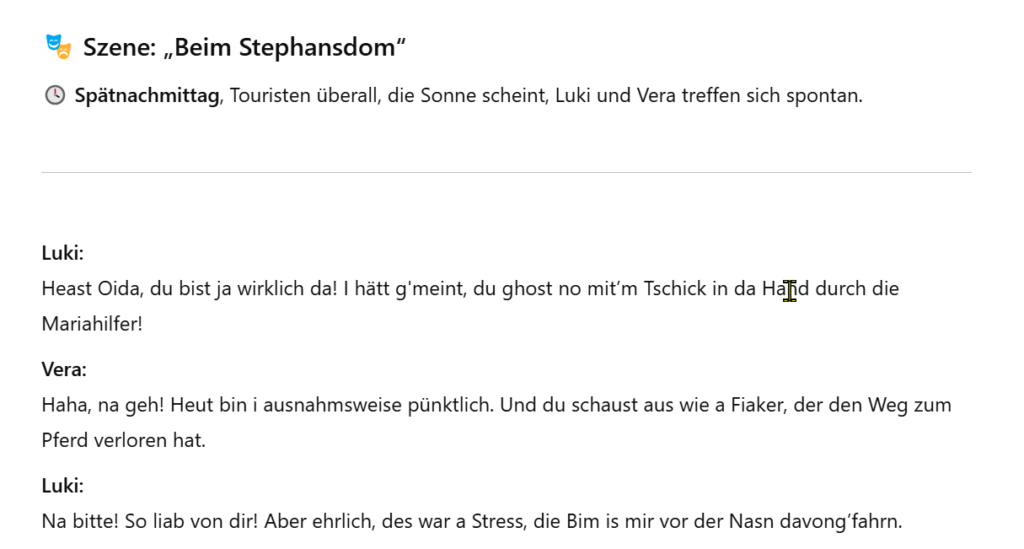
    LLM delivered this story (partially shown):

    Markup Creation with Prompts

    Now the markup creation started and this is where the challenge came: None of the LLMs I tried could deliver the markup with one prompt. I tried ChatGPT 4o, Grok 3 and Gemini 2.5 Pro.

    I defined a simple markup language earlier, also assisted by an LLM. Now me and all my LLMs had just to fill this markup text, but it proved to be too difficult for them.

    The beginning of the prompt was like this:
    “GENERATE MARKUP TEXT FOR LANGUAGE LEARNING INTERACTION

    We design a language learning interaction. I need a markup language for the following story builder game for language learning. In the markup language the full story is also stored, but for each word starting from the 10. word a choice of words is also stored. This choice of words has a choice of three different words. Only one word is correct grammatically that is marked with correct=true. All other words are clearly not correct. The user has to choose the correct word to continue.”

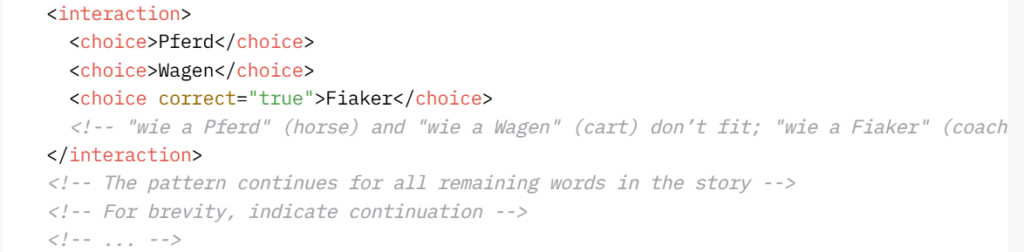
    ChatGPT 4o gave choices where multiple words were correct. Grok 3 was glitchy a few times (citing technical errors), then gave very good word choices and remarks (see below) until word choice 12, then it simply stopped with saying “the pattern continues”. Gemini 2.5 gave mostly good choices with around 10-20% where there were multiple correct answers (what is an error in this case).

    Finally I’ve used the Gemini Pro 2.5 version, it was at least a complete answer. It seems for such a story game generation multiple structured calls are needed, a kind of AI calling logic (or AI).

    I’ve sent Marcel the link that worked and he was happy about the story. He found it funny and suggested some improvements like making animations faster, include translations or definitions, saving certain expresions. He is also a developer, he advised using the effort-impact matrix for the backlog.

    Conclusions

    Conclusions I have about this development:

    1. Coding changed to “vibe coding”. Now I am at a place where most of the code is generated and checked by me, I do not need to write it directly. This did not come automatically though: to get to this point, I had to:
      1. Select the best architecture(next.js)
      1. Select the best authorization library and use it
      1. Define application folder structure
      1. Design and create database tables
      1. Design and create root components and routines
    2. Next.js, Vercel.com and Cursor.ai combine well
    3. We need tools not only to call AI in an automatically multiple times, but to check and correct the results in a comfortable and easy way
    4. I believe human developers and architects will be always needed. Humans are better in agency, in the ability to get things done no matter what.

    The author of this article, Zsolt Balai 1977 is a developer working on this „learning experience designer” now to create amazing gamified learning experiences. He is interested in language learning and teaching and believes that real spoken languages were, are and will be important in every age. He did use AI to create some pictures, but did not use any AI for the text of this article. This is why it is awkward sometimes, but at least real and authentic.