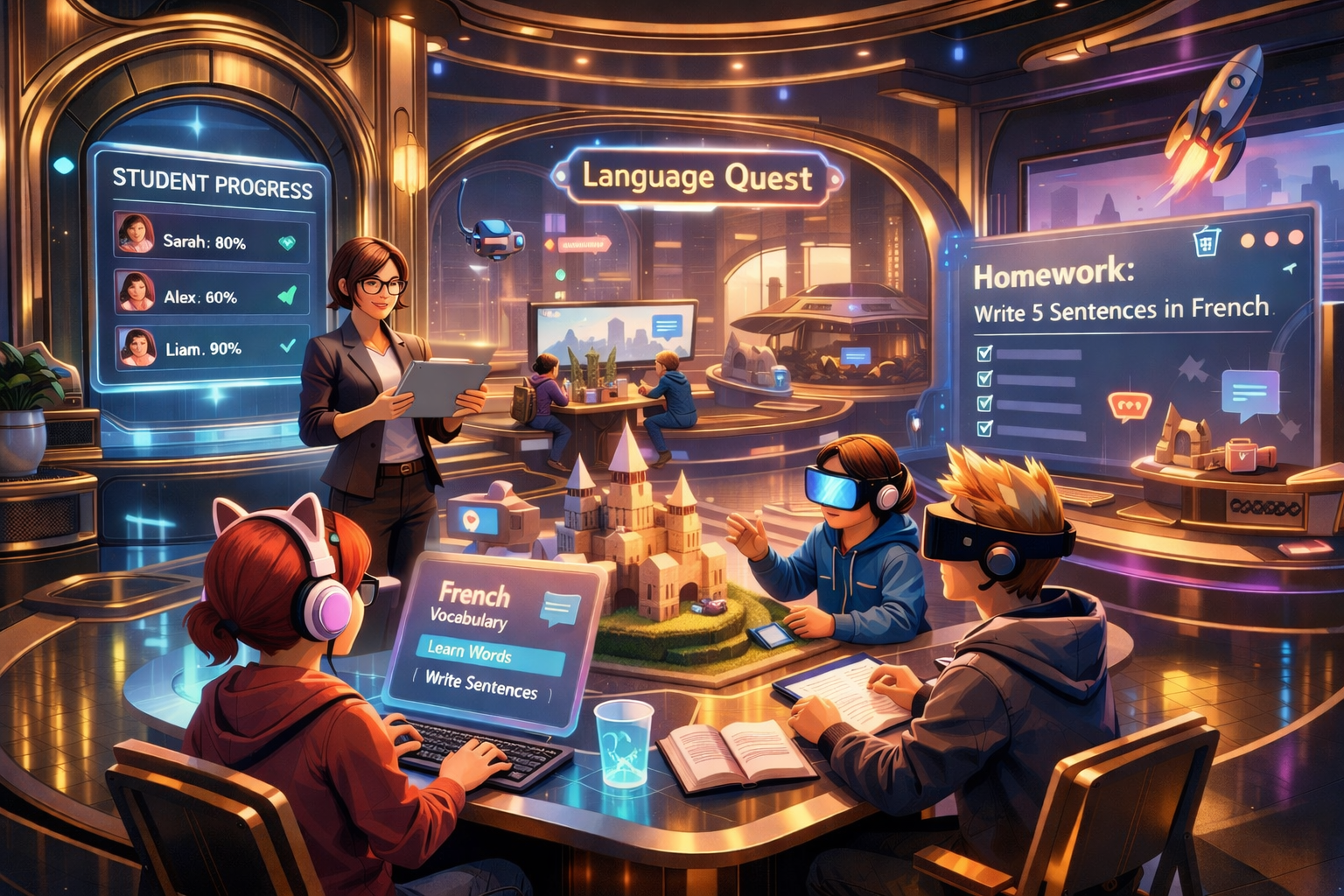
Recently, I had a conversation with a representative of a language institute. Together with a French teacher, we discussed the needs and ambitions of such an institute, and explored what kind of digital learning solutions could truly support their mission.
Two main directions emerged from the discussion:
- Library Gadget (VR Experience)
- Complete Online Collaborative Learning Environment
Library Gadget
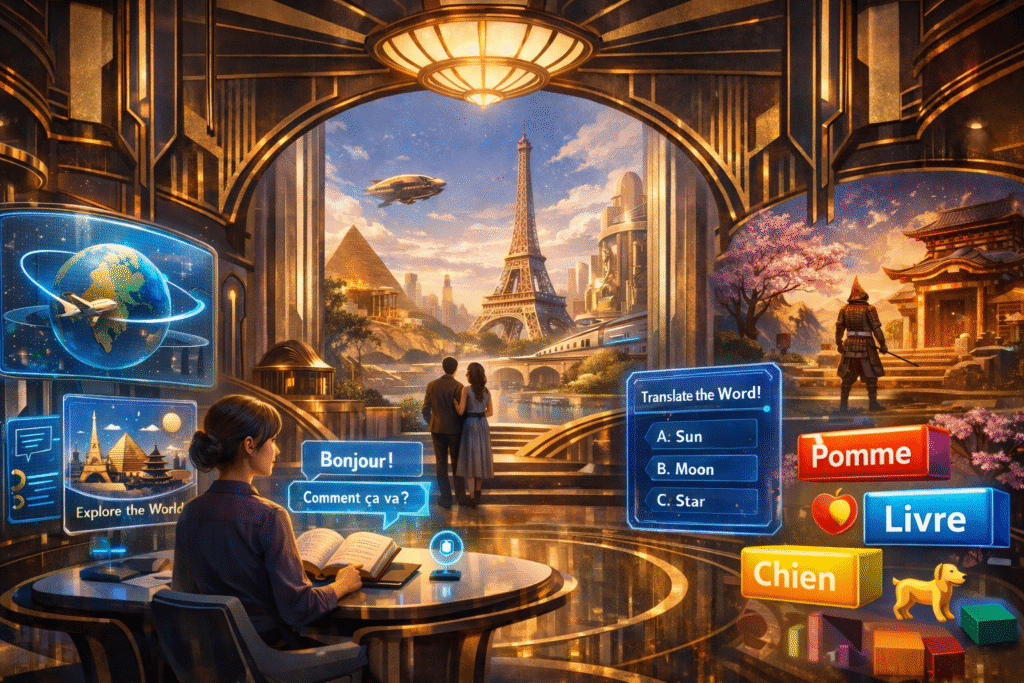
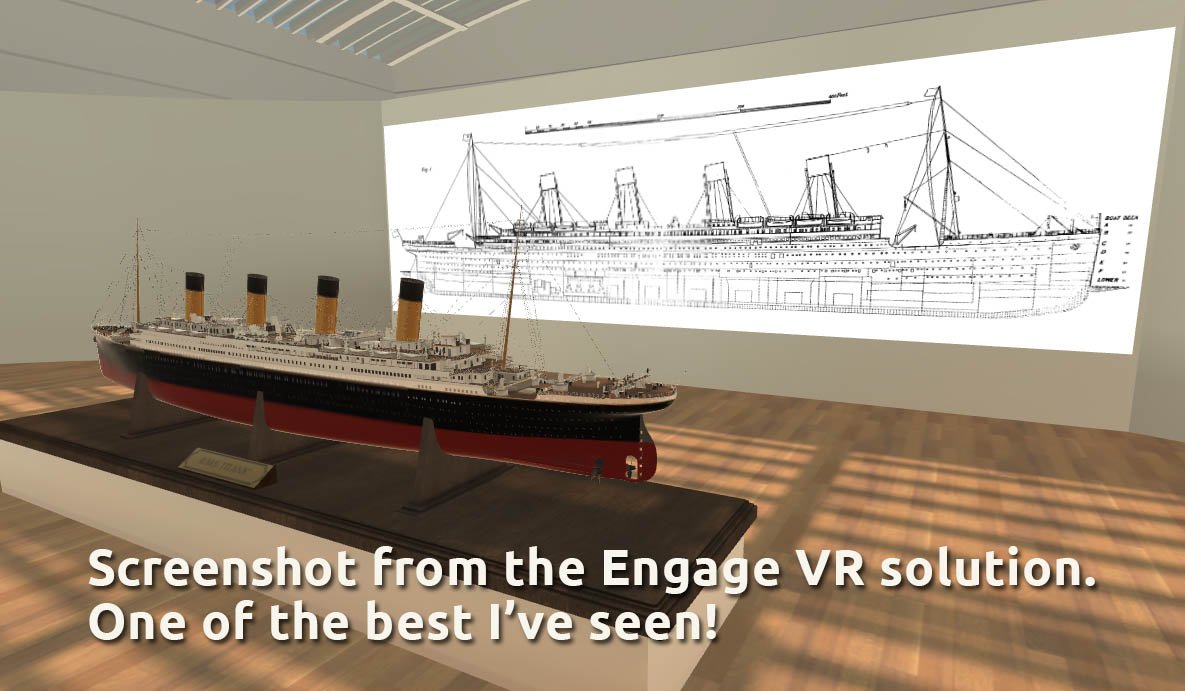
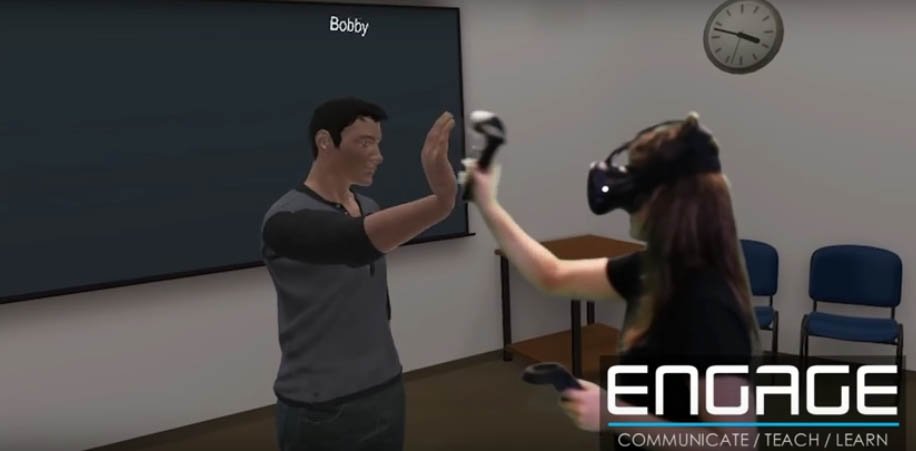
The first idea is a gadget-like solution that can be used inside the institute’s physical library to make visits more engaging and fun for children.
This would be a VR application where learners can enjoy short stories in immersive environments that spark curiosity and motivation for the language.
Typical usage:
- Core experience: 5–15 minutes
- Optional extensions or mini-games: +30–40 minutes
- Hardware: 4–10 VR headsets (e.g. Meta Quest 3)
Key characteristics of the VR app:
- Polished, intuitive interactions
- Engaging, story-driven content
- High-quality, colorful graphics
- Native voice recordings
- Short but memorable learning moments
The idea is not to replace traditional learning, but to create a wow-effect that associates the target language with positive emotions and exploration.
Online Collaborative Learning Environment
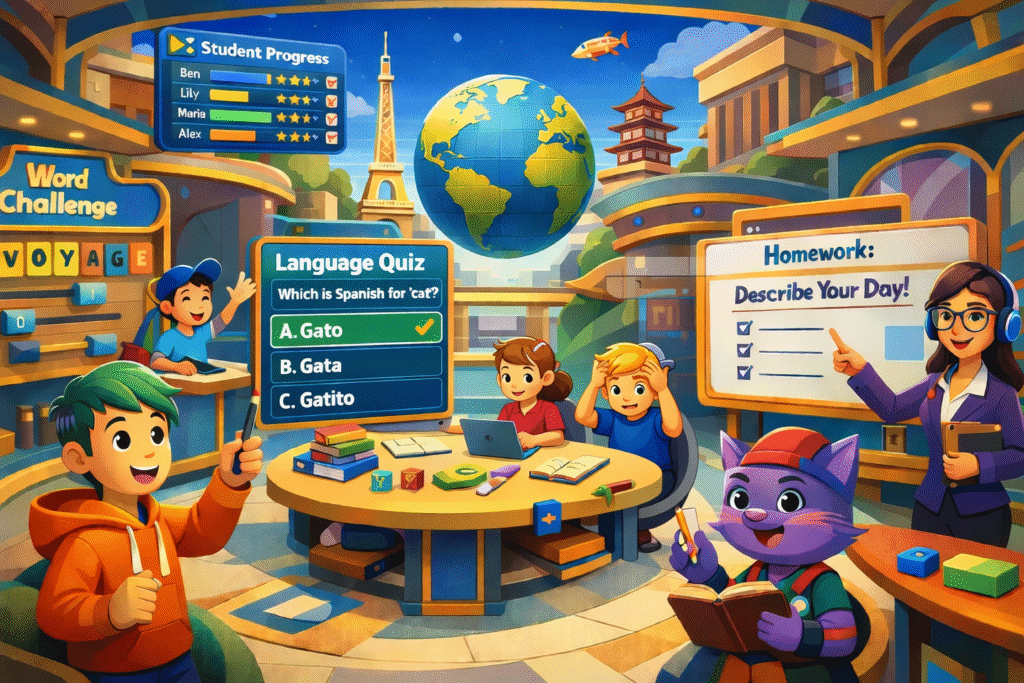
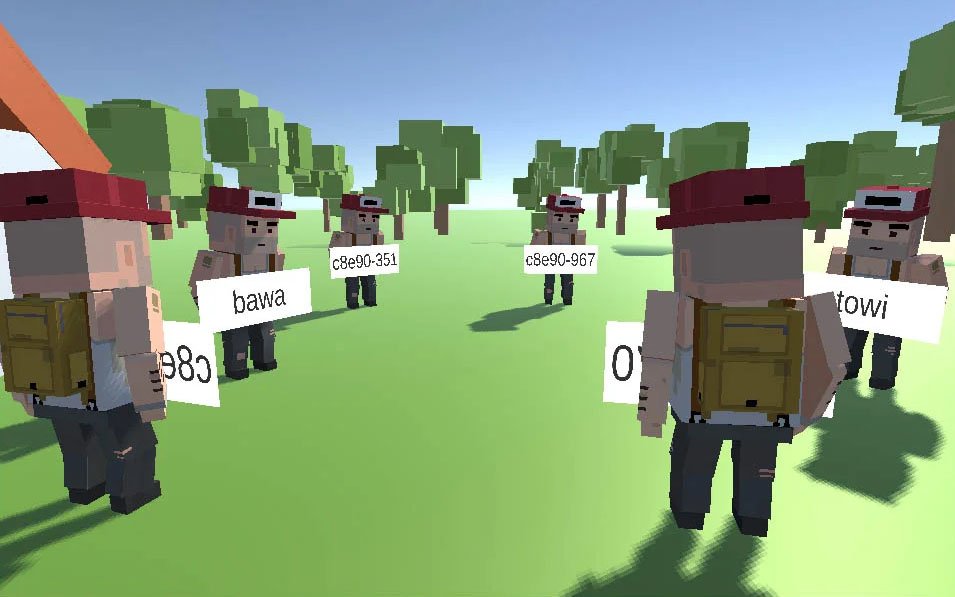
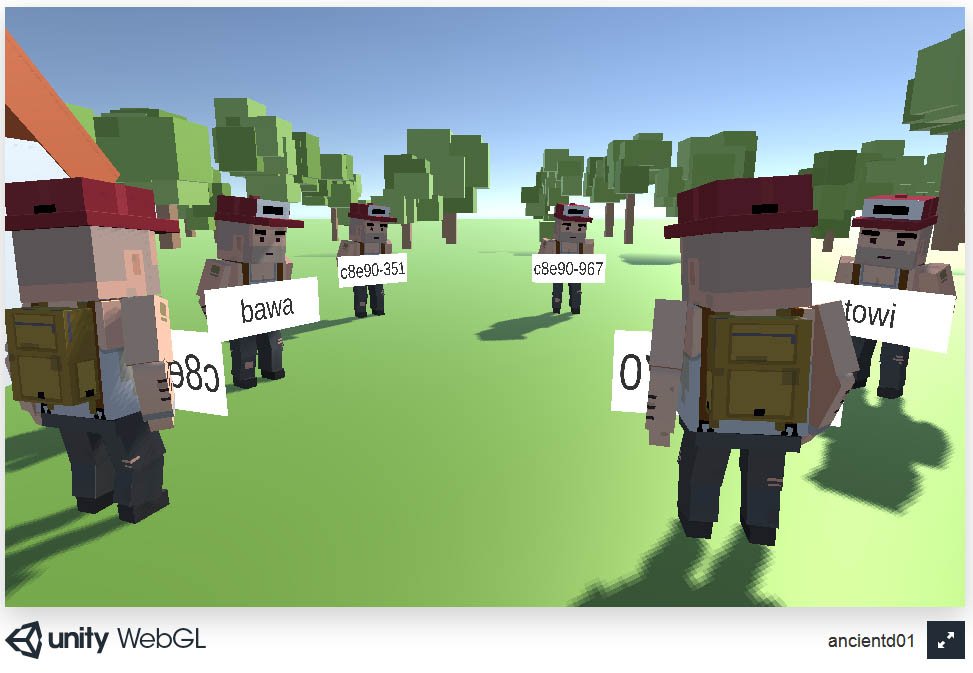
The institute observed that children starting ten play games like Minecraft. This led to the idea of offering a similar multiplayer 3D space where students can:
- Learn together
- Do homework collaboratively
- Explore the language through play
Core requirements:
- Fully 3D and multiplayer
- Exciting, creative, and colorful visual style
- Teachers can:
- Assign homework
- Track student progress
- Join the world as participants
In essence, this is a virtual learning world where language practice feels more like a game than a classroom.
Practical Limitations for Language Institutes
A major constraint for any language institute is quality control and coordination cost.
Such institutions represent:
- A national culture
- A linguistic authority
- A strong brand identity
This means:
- All texts must be grammatically perfect
- All visuals must be culturally accurate
- All interactions must be flawless
- No glitches, no mistakes
To ensure this level of quality, institutes must invest significant internal resources:
- Content review
- Linguistic validation
- Art direction
- Testing and QA
In practice, this often means:
For every 100 hours of development, there are at least 100 additional hours of coordination and quality assurance.
This effectively doubles the real cost of any serious project.
A Realistic Strategy
A pragmatic approach might be:
- Start with the VR Library Gadget for a single target language.
- Let the institute evaluate quality and impact.
- If successful, the institute could license it globally:
- 20–60 locations
- 100–400 users
- Approx. €10 per user
This creates a low-risk entry point before committing to a full-scale platform.
Fusion of Ideas: One Platform for VR and Desktop
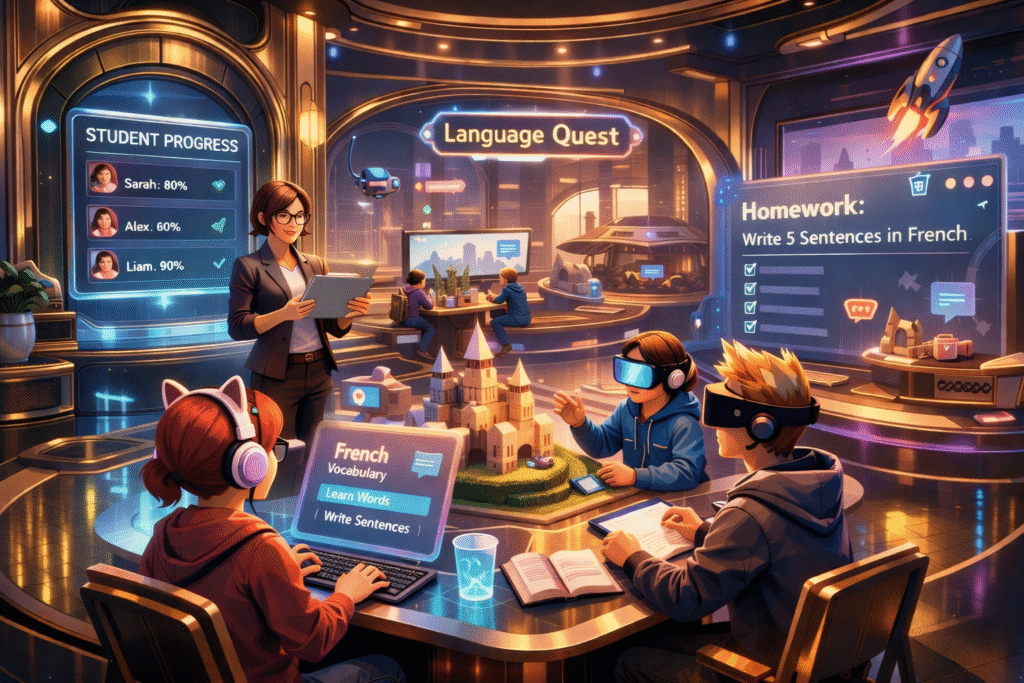
The two concepts can actually converge into a single solution:
A shared learning environment that works both in VR and in a desktop browser.
Technically, both platforms have similar constraints:
- Around 200,000 polygons per scene
- Simple lighting
- No heavy visual effects
So a unified design is realistic.
Shared Core Features
- Engaging, story-driven worlds
- Funny, colorful characters
- Polished, well-tested interactions
- Multiple mini-game types
- Different atmospheres and environments
- High-quality illustrations
- Flawless grammar and language
- Native speaker voice recordings
In spirit, it becomes:
A playful 3D playground where characters learn, explore, and interact together.
A place where language learning feels like adventure, not obligation.
Possible first steps for such a system:
- Research for similar solutions / usable technologies / standards
- A portal with register/login email/google/apple/facebook login
- Database: word sets table
- A 3D interaction with word sets
- Enable pictures with word sets
- Create characters to interact with
- 3 simple stories to teach language
- Story boards for these stories
- Realize first story
A New Development Paradigm: From Code to Intent
In the past, developing such a system would have required many months of work. In 2026, however, LLM-based assistants can support most programming tasks and handle a large part of what junior developers used to do. In practice, this feels like having a small software team working alongside you at all times.
Instead of relying solely on traditional prompting, development can follow an intent-based approach, where the desired functionality is described in structured markdown documents. This replaces the classical codebase with an intent base, from which the actual code is generated by LLMs. As a result, software development costs can be reduced to a fraction of what they were just a few years ago.
Zsolt Balai, the author of this article is a software developer and intent engineer. He is working on publishing gamified learning apps and collaborative multiplayer systems. Contact him on zbalai.com.